
Three Paths for a Fractured World
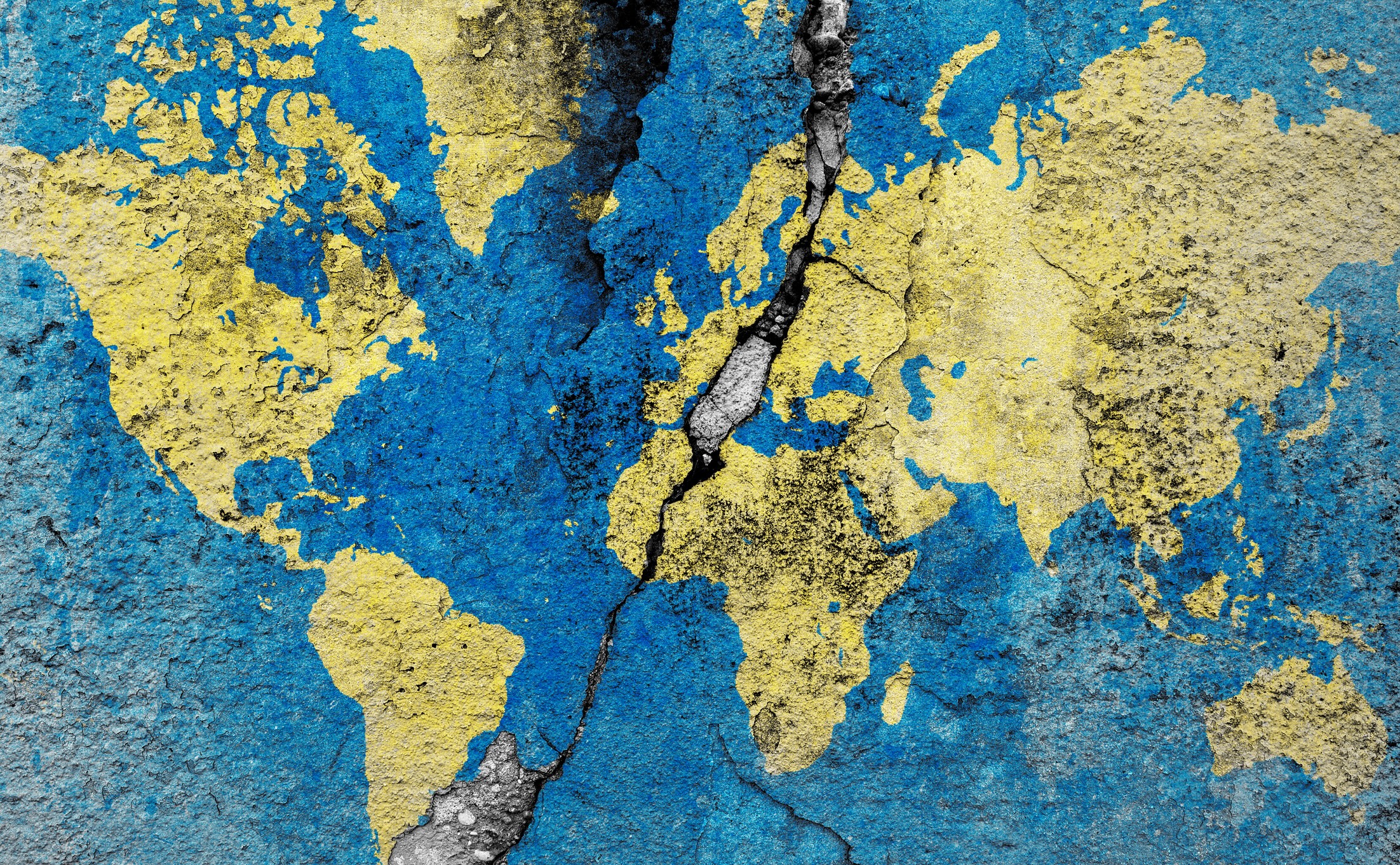
The old assumption that geopolitics is background noise for markets, governance, and development work has collapsed. In a matter of weeks, the U.S./Israel–Iran war has turned the Strait of Hormuz into a live strategic chokepoint, pushed energy security back to the center of global economics, and shown how quickly one regional conflict can reorder priorities from Brussels to Beijing.
That is why this is the wrong moment to plan around a single forecast. The more useful question is which futures are now plausible — and how organisations can remain effective if volatility lasts for years rather than months. A temporary ceasefire may reduce immediate tail risk, but it does not resolve the structural drivers of instability: Iranian leverage over Gulf shipping, Israel’s unresolved conflict with Hezbollah, Russia’s continuing war against Ukraine, and the still-sharpening rivalry between the United States and China.
The three scenarios below are not predictions. They are practical planning tools for organisations working across governance, peacebuilding, risk, markets, and development — a way to stress-test strategy, identify hidden vulnerabilities, and act earlier in a world that is fragmenting faster than many institutions are adapting.
Scenario 1: Fragile Containment
In the first scenario, the current ceasefire logic holds just enough to prevent a broader regional explosion, but not enough to restore normality. The United States, Iran, Israel, and key Gulf states avoid the most destructive escalatory steps, yet shipping through Hormuz remains politically managed rather than genuinely secure. Insurance premiums stay elevated, trade routes remain cautious, and energy markets price a persistent geopolitical premium even when spot prices fall back from their peaks.
In this environment, Ukraine does not disappear, but it becomes harder to keep at the top of the Western agenda. Europe continues to finance Kyiv and sustain sanctions, while Washington tries to compartmentalise theaters. Russia benefits indirectly from higher energy revenues and slower Western decision cycles, but it does not gain a decisive strategic breakthrough. The war in Ukraine remains attritional, costly, and unresolved.
US–China competition also continues, but with a more tactical tone. Washington stays hard on critical infrastructure, advanced technology, and investment screening. Beijing uses the Middle East crisis to project itself as a more predictable interlocutor and to reinforce the case for supply-chain resilience, industrial policy, and non-Western diplomatic channels. Competition remains sharp, but not yet system-breaking.
Economically, fragile containment produces sub-par but still positive growth. Inflation eases only slowly because energy and freight costs remain more volatile than markets had assumed at the start of 2026. Central banks keep rates restrictive for longer, risk assets recover selectively rather than broadly, and organisations operating in fragile contexts face a world of chronic instability rather than acute collapse.
For practitioners, this is the scenario of permanent vigilance. Demand remains strong for political-economy analysis, sanctions and compliance support, conflict-sensitive programming, due diligence, civic-space monitoring, and risk-mapping tools that can be updated quickly as conditions shift.
Scenario 2: Prolonged Regional War and Global Stagflation
The second scenario is the one markets now fear most. The ceasefire breaks down, the United States expands coercive maritime and infrastructure measures, Iran responds through Hormuz and regional proxies, and Lebanon becomes a fully reactivated front. Energy infrastructure, Red Sea shipping, Gulf ports, and logistics nodes remain under sustained threat. The result is not simply an oil spike. It is a broader commercial-security shock.
In this world, Brent crude remains structurally high, LNG supply stays tight, fertilizer and shipping costs rise, and food inflation follows energy inflation higher. Advanced economies face stagflation-lite conditions; more fragile import-dependent states face something much worse, including severe balance-of-payments stress and renewed social instability. The pressure falls disproportionately on energy importers, low-income countries, and middle-income states with high debt and weak fiscal buffers.
The strategic spillover is severe. Ukraine is crowded out further, Russia gains both revenue and operating room, and transatlantic policymakers become more reactive than strategic. US–China tensions also worsen because Washington’s security posture hardens while Beijing resists alignment and presents itself as an alternative diplomatic pole. The probability of secondary crises — in maritime trade, debt distress, or regional proxy theaters — rises materially.
For markets, this is the harshest repricing scenario. Equities correct further, rate-cut expectations are pushed back, the dollar remains supported, and capital becomes more selective. Safe havens do not necessarily rally in a straight line, because higher inflation and higher yields can complicate the usual relationships. What does become clear is that resilience, liquidity, and political risk discipline matter more than pure growth optimism.
For the governance and development community, this is the scenario that punishes weak contingency planning. Needs rise fast, donor flexibility shrinks, and politically informed programming becomes essential. Organisations that perform best will be those that have diversified their partnerships, mapped exposure to conflict spillovers, and built strong local intelligence networks rather than relying on static assumptions.
Scenario 3: Negotiated Stabilisation and Selective Reset
The upside scenario is still possible, but it has become narrower and more conditional. It would require more than a short pause in fighting. It would need a verified and mutually acknowledged process that reduces strikes on energy and civilian infrastructure, restores practical shipping security through Hormuz, contains the Lebanon front, and establishes enough trust for follow-on negotiations to continue. A narrow process in Islamabad could still evolve into something more durable, but only if actions begin to match rhetoric.
If that happens, the benefits would be meaningful even without a full peace. Oil and freight premia would gradually decline, central banks would regain some room to ease, and business confidence would stabilise. Europe would still face a weak-growth environment, but it would no longer be hit by an active imported-energy shock of the current magnitude. The United States would regain diplomatic bandwidth, and Ukraine would have a better chance of moving back toward the center of Western strategy.
A selective reset would also improve the odds of more disciplined great-power management. Washington and Beijing would remain competitors, but with less immediate pressure from the Middle East. Reconstruction, climate-transition investment, and selective infrastructure finance would again look more attractive than crisis spending alone. Emerging markets with institutional credibility and a manageable external position could benefit disproportionately.
This scenario would not represent a return to a benign, rules-based world. It would be a narrower, pragmatic stabilisation — a world in which actors choose to manage risks because the cost of not doing so has become too visible. That would still be a significant improvement on the current trajectory.
What This Means for Practitioners Now
Across all three scenarios, several messages stand out more clearly now than when this article was first drafted.
First, geopolitics is no longer a background variable. It is directly shaping inflation, investment decisions, supply-chain design, donor priorities, and the political feasibility of reform. Organisations that separate ‘context’ from delivery are likely to misread the operating environment.
Second, resilience matters more than prediction. No one can forecast the exact timing of ceasefires, retaliatory strikes, elections, or market reversals. The better question is whether strategies still work under stress: when energy prices jump, when sanctions widen, when donors delay decisions, or when local political settlements deteriorate.
Third, middle powers and regional actors matter more than before. Pakistan’s mediation role, Gulf state hedging, Europe’s energy-policy response, and China’s diplomatic positioning all show that the future is not shaped only by Washington, Beijing, Moscow, or Tehran. Strategic agility now depends on understanding the swing states and the intermediary powers that increasingly shape outcomes.
Finally, there is a growing premium on high-quality, conflict-sensitive, and politically informed programming. Donors, investors, and operational partners are not just looking for technical delivery. They are looking for context-aware judgement, credible risk analysis, and interventions that are politically feasible as well as technically sound.
A Final Note
At IREGS, we see these scenarios not as predictions but as practical tools. Their value is not in claiming certainty. Their value is in helping organisations stress-test assumptions, identify vulnerabilities, and act earlier than they otherwise would.
The current moment is a reminder that the world does not move neatly from risk to stability. It often moves through unstable pauses, contested narratives, and partial resets. That is exactly why serious scenario planning matters.
For organizations navigating these risks, IREGS offers practical analysis tailored to country contexts, sectors, portfolios, and program design. Our work combines field-grounded insight with strategic analysis to support decisions that are politically informed, conflict-sensitive, and operationally realistic. To learn more about how we can support your work, explore our fixed-price services or join our growing consultant roster.